To Understand Troyes Today, You Must First Know Its Past
Understanding Troyes begins with exploring its origins and discovering the events that, over the centuries, have shaped the character of this remarkable city.
To help you discover the history of Troyes, we have first created a chronological overview of the major events that have marked its development. Some of these topics deserve a more in-depth exploration, so we have dedicated separate sections to them.
HISTORY OF TROYES
Twenty Centuries of History at the Heart of Champagne
From the Gallic settlement of the Tricasses to the French capital of knitwear, Troyes has left its mark on history time and again: a church council that crowned a king, another that gave birth to the Knights Templar, fairs that helped finance Europe, the Holy Grail brought to life by a poet, and a treaty that nearly erased France from history.
Why Is Troyes Worth Visiting ?
Let's set the scene. Troyes is not simply a "small provincial town" that happened to enjoy a few moments of glory. It is a city that repeatedly stood at the heart of French and European history—first because of its strategic location at the crossroads of the trade routes linking Italy and Flanders, and later thanks to the vision of its counts, merchants, and craftsmen.
Antiquity and the Early Middle Ages: The Birth of a Cityntiquité
Before the Roman Conquest
From the Gallic Tricasses to the Roman City of Augustobonaes
Before the arrival of the Romans, this land belonged to the Gallic tribe known as the Tricasses, from whom the city takes its name. Under Roman rule, the settlement became Augustobona Tricassium, situated on the major commercial route linking northern and southern Gaul.
Remember this essential fact: from its very beginnings, Troyes was a city of trade and exchange. Everything that followed in its history stems from this privileged position.
3rd–4th Centuries
The First City Walls
Faced with repeated invasions, the inhabitants withdrew behind fortified walls. The outline of these ancient ramparts can still be traced today and forms the "head" of what locals affectionately call the Champagne Cork, the distinctive shape of Troyes' historic centre.
AD 451
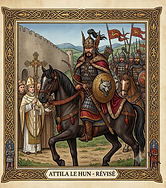
Saint Loup Stops Attila
When Attila and his Huns swept through Gaul and approached Troyes, Bishop Lupus of Troyes (later Saint Loup) negotiated with the invaders and, according to tradition, persuaded Attila to spare the city. Although the details belong as much to legend as to history, the episode became one of the founding stories of Troyes' religious identity.
September 7, 878
A Pope Crowns a King in Troyes
One of the city's lesser-known yet remarkable moments occurred when Pope John VIII, driven from Rome, travelled to West Francia and convened a church council in Troyes during the summer of 878.
On September 7, he crowned King Louis II "the Stammerer," son of Charles the Bald, in the Church of Saint-Jean. Although Louis had already been crowned the previous year, receiving the royal anointing directly from the Pope on French soil was an exceptional event that reinforced the sacred legitimacy of the Carolingian monarchy.
The Medieval Golden Age (11th–13th Centuries): Troyes at Its Peak
During these two centuries, Troyes became one of Europe's leading cities. It produced a renowned scholar, gave birth to a military order, inspired a new literary tradition, and helped shape the foundations of modern finance.
1040 – 1105
Rashi: The Greatest Medieval Biblical Commentatorchi
Born and buried in Troyes, Rabbi Shlomo Yitzhaki—better known as Rashi—is considered the greatest commentator on the Hebrew Bible and the Talmud.
His academy made Troyes an international centre of Jewish learning, and his writings continue to be studied throughout the world. Today, the city honours him with a memorial and an institute bearing his name.
January 13, 1129
The Council That Founded the Knights Templar
Hugues de Payns, born in the nearby village of Payns, had established a small brotherhood of warrior monks in the Holy Land. To obtain official recognition, Pope Honorius II convened a church council in Troyes.
Guided by the decisive influence of Bernard of Clairvaux, one of the greatest spiritual figures of the age, the council officially recognised the Order of the Temple and approved its Rule.
The extraordinary history of the Knights Templar, identifiable by their red cross on a white mantle, truly began in Troyes.
12th Century
The Court of Champagne: The Capital of Courtly Love
At that time, Troyes was the capital of the powerful Counts of Champagne, among the greatest vassals of the King of France.
Under the patronage of Countess Marie of Champagne, daughter of Eleanor of Aquitaine and King Louis VII, the court became Europe's foremost centre of courtly love. Its ideals of honour, devotion, refinement, and respect profoundly influenced medieval literature, chivalry, and relationships between men and women across Western Europe.
c. 1170–1190
Chrétien de Troyes Invents the Arthurian Romance... and the Grail
Serving at the Champagne court, Chrétien de Troyes is regarded as the father of the medieval romance.
Through works such as Lancelot—commissioned by Marie of Champagne—and Perceval, he popularised the legends of King Arthur and the Round Table while introducing the Holy Grail into literature for the very first time.
One of the defining myths of Western civilisation was born beneath the pen of a poet from Troyes.
12th–13th Centuries
The Champagne Fairs: Europe's Marketplace
Twice a year, Troyes became the greatest commercial and financial crossroads in medieval Europe.
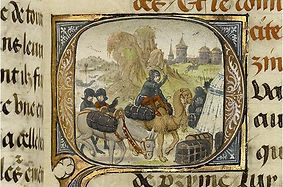
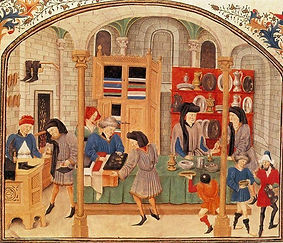
Merchants from Italy, Flanders, Germany, Spain, and beyond gathered here to trade cloth, silk, leather, spices, and precious metals.
Even more importantly, the Champagne Fairs witnessed the emergence of some of Western Europe's earliest banking practices, including bills of exchange and large-scale commercial credit.
Troyes did more than sell goods—it helped invent modern finance.
Did You Know?
The famous troy ounce, still used today to measure and trade gold and silver on international markets, owes its name to the medieval fairs of Troyes.
Equivalent to approximately 31.1 grams, this unit of weight remains the global standard more than eight centuries later—a lasting reminder of Troyes' extraordinary commercial influence.
1284
The Marriage That Brought Champagne into the Kingdom of France
In 1284, the future King Philip IV "the Fair" married Joan of Navarre, Countess of Champagne and heir to one of the wealthiest principalities in medieval France. Their marriage sealed the integration of the rich County of Champagne into the royal domain, a process completed in the early fourteenth century. It marked a decisive step in the centralisation of royal power and the construction of the modern French state.
May 21, 1420
The Treaty of Troyes: "The Shameful Treaty"
This is undoubtedly the best-known event in the city's history.
Signed in Troyes Cathedral, the Treaty of Troyes recognised King Henry V of England as the legitimate heir to the French throne, disinheriting the Dauphin, the future Charles VII. Negotiated by the Anglo-Burgundian alliance with the support of Queen Isabeau of Bavaria, the treaty brought French sovereignty to the brink of extinction.
July 1429
Jeanne d'Arc Wins Troyes Back
France's recovery came swiftly.
During her march to Reims to have Charles VII crowned King of France, Joan of Arc secured the peaceful surrender of Troyes without bloodshed. The return of the Champagne towns to the French Crown marked a decisive turning point in the Hundred Years' War.
Only nine years after the "Shameful Treaty," Troyes once again became part of the Kingdom of France.
The Renaissance and the Early Modern Period: Splendour and Turmoil
1524
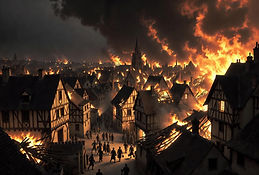
The Great Fire... and the Renaissance City
A devastating fire destroyed the merchants' quarter.
Paradoxically, this disaster gave Troyes the appearance it is admired for today. Rebuilt over the following decades, the city became a showcase of timber-framed architecture, now considered the finest collection of its kind in France.
This period also marked the city's "Beautiful Sixteenth Century," a golden age for stained-glass artists, sculptors, and master craftsmen. Many of Troyes' magnificent stained-glass windows, statues, and stone rood screens date from this remarkable rebuilding.
septembre 1572
The St. Bartholomew's Day Massacre in Troyes
Only days after the massacres in Paris, religious violence reached Troyes.
Despite appeals for restraint, imprisoned Protestants were massacred. This tragic episode illustrates the devastating impact of the French Wars of Religion, whose violence extended far beyond the capital into the provinces.
Seventeenth to Nineteenth Centuries
The Bibliothèque Bleue: Books for Everyone
This is one of Troyes' proudest cultural achievements.
At the beginning of the seventeenth century, the Oudot family of printers created the Bibliothèque Bleue ("Blue Library"): inexpensive booklets with distinctive blue-grey covers that were distributed throughout the countryside by travelling peddlers.
Fairy tales, saints' lives, popular stories, and novels thus reached ordinary households across France. This publishing phenomenon represents one of the earliest milestones in the democratisation of reading and the spread of literacy.
The Modern Era: From Napoleon to Knitwear
February–March 1814
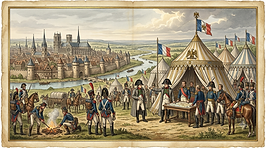
Napoleon and the French Campaign
As the allied armies—Prussian, Russian, and Austrian—advanced towards Paris, Troyes became a strategic stronghold.
Napoleon I established his headquarters there several times. The city changed hands repeatedly and endured the hardships of military occupation and fighting. Troyes became one of the last major theatres of operations before Napoleon's abdication.
Nineteenth and Twentieth Centuries
The French Capital of Knitwear
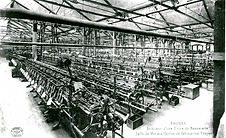
With the Industrial Revolution, Troyes became the French capital of knitwear, producing stockings, socks, underwear, and other knitted garments.
At its peak, the textile industry employed as many as 25,000 workers. The city manufactured not only its products but also its own machinery and internationally recognised brands.
Petit Bateau, founded by the Valton family in 1893, was born in Troyes, as was Dim. In 1933, tennis champion René Lacoste joined forces with leading Troyes knitwear manufacturer André Gillier to create La Chemise Lacoste. The famous crocodile polo shirt was first produced in Troyes.
This industrial heritage explains the city's successful economic transformation. Today, Troyes is recognised as Europe's outlet-shopping capital, attracting millions of visitors every year.
Fascinating Facts
The Mystery of the Champagne Cork
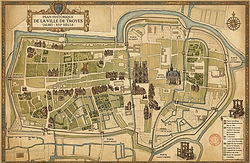
Seen from above, the historic centre of Troyes forms the unmistakable shape of a champagne cork.
The "head" corresponds to the ancient Gallo-Roman city surrounding the cathedral, while the "body" represents the medieval merchants' quarter.
This remarkable outline is entirely accidental, resulting from the course of the old city walls and the canals of the River Seine. It appeared centuries before champagne itself was invented and was only recognised long after the Middle Ages.
Why Are the Houses So Colourful?
During the Middle Ages, the timber frames of houses were coated with limewash or natural pigments to protect the wood.
During the major restoration campaigns of the 1960s and 1970s, the city chose to revive these vibrant colours—ochre, pastel blue, green, and oxblood red—inspired by Renaissance palettes.
The result is the cheerful, highly photogenic historic centre that visitors admire today.
One City, Four Worldwide Legacies
Few cities of this size can claim such an extraordinary legacy.
Troyes gave the world:
-
the literary legend of the Holy Grail through Chrétien de Troyes;
-
the Rule of the Knights Templar, approved at the Council of Troyes in 1129;
-
the troy ounce, still used on international precious metals markets;
-
and one of Europe's earliest forms of affordable mass-market publishing with the Bibliothèque Bleue.
Conclusion
From the coronation of a Carolingian king to the birth of the iconic crocodile polo shirt, through the Champagne Fairs, the Knights Templar, the Holy Grail, and the Bibliothèque Bleue, Troyes has continually shaped the history of France and Europe.
Its urban landscape—Gothic churches, exceptional stained-glass windows, and beautifully preserved timber-framed houses—remains a living witness to this extraordinary past.
This is the history we invite you not only to discover, but also to understand as you stroll through the streets of Troyes.
Enjoy your visit to Troyes—the City of a Thousand Stories in the Heart of Champagne.



THE TRICASSES
The Origins of an Ancient City
Welcome to Troyes!
Before wandering through its charming half-timbered streets and admiring the splendour of its Gothic churches, let us travel back more than 2,000 years, to a time when the city did not yet bear its present name and this land belonged to a Gallic tribe known as the Tricasses.
🏹 Who Were the Tricasses?
The Tricasses settled along the River Seine, in what is now the Aube department, as early as the 6th century BC. They occupied a highly strategic location at the crossroads of dry Champagne, wet Champagne, and the Pays d'Othe—a natural hub for trade, yet also a marshy, fertile landscape that was difficult for enemies to conquer.
The origin of their name remains one of those fascinating historical mysteries that visitors enjoy discovering.
The oldest interpretation suggests it refers to "three locks" or "three braids," perhaps the distinctive hairstyle worn by Celtic warriors. More recent research, however, offers a completely different explanation: the Tricasses may have been "the carriers" or "the traders" who transported tin from northern Europe to the Mediterranean.
No one has yet settled the debate—which is precisely what makes the story so intriguing.
🏛️ From a Gallic Settlement to the Roman City of Augustobona
When Emperor Augustus reorganised Gaul between 27 and 13 BC, the Romans founded a new town on this site: Augustobona, meaning "the city founded by Augustus."
The town occupied a strategic position on the Via Agrippa, one of the Roman Empire's great roads linking Milan with Boulogne-sur-Mer. Troyes therefore stood on one of the principal routes connecting Roman Italy with the English Channel.
Did You Know?
You can still walk along this ancient Roman road today.
It is now Rue de la Cité, which follows the line of the city's decumanus maximus, the principal east-west street of Roman Troyes. The cardo maximus, the north-south axis, corresponds to today's Rue de la Tour and Rue Boucherat.
By the end of the 4th century, faced with increasing Germanic invasions, the inhabitants enclosed the city within a square defensive wall measuring roughly 400 metres on each side. Much of it was built using stones salvaged from dismantled Roman monuments.
It was during this period that the name of the original Gallic tribe gradually replaced that of the Roman emperor. Augustobona became Civitas Tricassium, a name that evolved over the centuries through forms such as Trecassis, Treci, and Troies, before becoming the modern Troyes.
🏰 The Middle Ages and the Mystery of the "Champagne Cork"
Several centuries later, Troyes became the prestigious capital of the Counts of Champagne.
During the 12th and 13th centuries, the city flourished thanks to the famous Champagne Fairs. Merchants from across Europe gathered here to trade cloth, spices, precious metals, and currencies, making Troyes one of the greatest commercial and financial centres of medieval Europe.
As trade expanded, the city outgrew its original Roman walls and spread westwards to accommodate its thriving merchant community.
Surrounded by new ramparts and water-filled moats following the winding course of the River Seine, Troyes gradually acquired the distinctive outline it still has today.
Seen from above, the historic centre forms the unmistakable shape of a... champagne cork!
A Little Historical Secret
The original Roman enclosure of the Tricasses forms only the "head" of the cork, around the cathedral and the old Cité district.
The "body" of the cork developed during the Middle Ages as the city expanded westwards, where Troyes' lively commercial centre still thrives today.
🥾 Your Journey Begins Here
As you explore the historic streets of Troyes, remember that beneath the cobblestones and colourful half-timbered houses lie Roman foundations and the still-unsolved mysteries of the Tricasses.
Enjoy your journey through 2,500 years of Champagne history!


THE COUNTS OF CHAMPAGNE
The Medieval Golden Age of Champagne
The Counts of Champagne, their brilliant court, and the lasting legacy of the Champagne Fairs on today's landscape.
1. Champagne: A Medieval Superpower
Understanding the Counts of Champagne allows you to see the medieval landscape in a completely different light. The towns, fairs, cathedrals, castles, and economic prosperity of the region were all closely linked to their rule.
Between the 11th and 13th centuries, the County of Champagne was one of the most powerful principalities in Western Europe, often rivaling the King of France himself.
💡 Did You Know?
The famous "Champagne Cork"—the distinctive outline of Troyes' historic centre—owes its shape largely to the Counts of Champagne. They diverted branches of the River Seine, built new defensive walls, and dug the moats that created the city's unique silhouette.
2. From Divided Territories to a Unified County (11th–12th Centuries)
Originally, Champagne was far from united. It consisted of several rival counties centred on Troyes, Meaux, Provins, and Bar-sur-Aube.
During the 11th century, the powerful House of Blois inherited these territories and gradually united them under a single authority.
Early 12th Century
Hugh I: The First Count of Champagne
Hugh I was the first ruler officially to bear the title Count of Champagne.
A deeply religious man and close friend of Bernard of Clairvaux, he became one of the greatest patrons of the Cistercian Order.
His most extraordinary decision came when, inspired by profound spiritual devotion, he renounced his title, wealth, and lands in favour of his nephew before joining the Knights Templar, becoming one of the Order's earliest knights.
3. Theobald the Great: Architect of the Champenois State
1125–1152
Theobald II of Champagne
Hugh's nephew transformed the county into one of medieval Europe's most effective political and economic powers.
Known as Theobald the Great, he fiercely defended his independence from the King of France. His territories almost completely surrounded the small Capetian royal domain, making Champagne a permanent challenge to royal authority.
It was during his reign that the Champagne Fairs acquired their international reputation.
4. Henry I the Liberal: The Golden Age
1152–1181
Champagne at Its Height
If there is one Count of Champagne to remember, it is undoubtedly Henry I "the Liberal."
His reign marked the high point of the principality, then regarded as one of the wealthiest, safest, and best-administered states in Europe.
The Economic Miracle of the Champagne Fairs
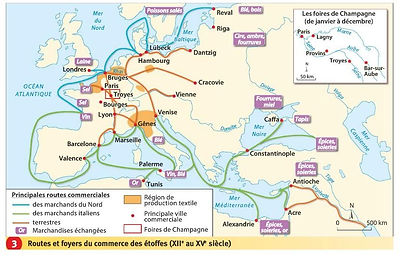
Henry organised and expanded the great annual cycle of Champagne Fairs, held throughout the year in four major towns.
Troyes, the political capital, hosted both the summer ("warm") and winter ("cold") fairs, while Provins, Lagny-sur-Marne, and Bar-sur-Aube completed the annual commercial calendar.
💸 Safe-Conducts and the Troy Ounce
To attract merchants from Italy, Flanders, and beyond, Henry introduced an extraordinary guarantee: the Count's Safe-Conduct.
Any merchant robbed or attacked within his territories would be fully compensated from the Count's own treasury, while the offenders would be pursued by his soldiers.
This unprecedented level of security helped make Champagne the safest commercial region in Europe.
It was also during this period that the troy ounce, the unit used to weigh gold and silver, became established. So accurate was this standard that it remains the international measure for precious metals today.
A Brilliant Court and Courtly Love
Henry transformed his court in Troyes into one of Europe's foremost cultural centres.
He married Marie of France, daughter of the legendary Eleanor of Aquitaine.
Together they became patrons of the greatest writers of the age, including Chrétien de Troyes, who composed many of the Arthurian legends, introduced the Holy Grail into literature, and helped define the ideals of courtly love.
5. Crusading Counts and an International Destiny
The dynasty was closely linked to the Crusades and the Latin East, encouraging remarkable exchanges in culture, architecture, science, and botany.
Henry I took part in the Second Crusade.
His son, Henry II of Champagne, travelled to the Holy Land, married Queen Isabella of Jerusalem, and in 1192 became King of Jerusalem.
His younger brother, Theobald III, was chosen to lead the Fourth Crusade during a great tournament held at his castle of Écry. Tragically, he died in 1201 at the age of only twenty, shortly before the expedition departed.
6. Theobald the Troubadour: The Count Who Became a King
1201–1253
The Most Romantic of the Counts
Born after the death of his father, Theobald III, Theobald IV entered the world already an orphan.
His childhood was marked by violent succession disputes, but his mother, Blanche of Navarre, courageously defended his inheritance.
A Prince, Poet, and Musician
Remembered as Theobald the Troubadour, he became one of the Middle Ages' greatest poets and composers.
Legend tells us that many of his songs of courtly love were inspired by the beautiful Blanche of Castile, Queen of France and mother of Saint Louis, with whom he was hopelessly and secretly in love despite their political rivalries.
The Crown of Navarre
In 1234, thanks to his mother's family ties, Theobald inherited the Kingdom of Navarre and became King Theobald I of Navarre, while remaining Count of Champagne.
The House of Champagne had now entered the exclusive circle of Europe's royal dynasties.
🌹 Botanical Anecdote
Following Theobald's crusade of 1239, the famous Damask Rose is said to have been introduced into Europe.
It later became known as the Rose of Provins, prized for both its medicinal qualities and its delicate fragrance.
7. Decline and Union with France
As kings of Navarre, Theobald's successors spent increasing amounts of time in their palace at Pamplona and gradually neglected Champagne.
Although the county retained an exceptionally efficient administration, its political independence slowly faded.
The turning point came with the last direct heiress, Joan I of Navarre.
In 1284, she married the heir to the French throne, the future Philip IV "the Fair."
Through this marriage, Champagne's immense wealth passed to the French Crown.
When their eldest son died in 1314, the county finally lost its autonomy and became permanently incorporated into the Kingdom of France.
8. What Can You See Today?
Troyes – The Political Capital
Walk through the Saint-Jean district and follow its narrow medieval streets.
Look for the traces of the former canals dug by the Counts of Champagne to power the mills serving the tanners and cloth-makers.
Standing before the Church of Saint-Jean-au-Marché, imagine the bustling atmosphere of the medieval fairs.
Provins – The Commercial Stronghold
Discover the spectacular medieval ramparts built by the Counts, the imposing Caesar's Tower, symbol of their authority, and the vast underground galleries and warehouses where merchants once stored their precious textiles.
Clairvaux Abbey
The famous abbey was founded thanks to generous land donations from Count Hugh I, sealing the enduring alliance between the Counts of Champagne and the Cistercian Order.
9. Champagne in One Minute
The Counts of Champagne achieved an extraordinary feat. They transformed a fragmented region into the commercial crossroads of medieval Europe. By guaranteeing the safety of merchants, promoting a stable economy, and pursuing an ambitious diplomacy that carried members of their dynasty to the thrones of Jerusalem and Navarre, they created one of the greatest economic and cultural golden ages of the Middle Ages. When Champagne was united with France through marriage in 1284, its immense wealth would help strengthen the French Crown for generations to come.


CHAMPAGNE FAIRS
The Economic Heart of Medieval Europe (12th–14th Centuries)
For 150 years, Champagne was the greatest commercial and financial crossroads in Western Europe—and the birthplace of modern banking.
1. Europe's First "Common Market"
Between 1150 and 1300, Champagne hosted the largest commercial hub in Western Europe, bringing together two economic powerhouses.
To the north lay Flanders, renowned for its highly prized woollen cloth. To the south were the great Italian city-states—Genoa, Venice, and Florence—bringing silk and exotic spices from the East.
Imagine an international airport hub in the Middle Ages—but without airplanes.
For a century and a half, Champagne stood at the centre of the European economy. Every language could be heard in its streets, and when the fairs opened, the population of its towns could triple almost overnight.
2. A Unique Year-Round Cycle
The fairs never stopped.
They rotated continuously throughout the year between four towns in an unchanging sequence. As soon as one fair ended, another began just a few dozen miles away.
January–February
Lagny-sur-Marne – One Fair
The Winter Fair opened the annual trading cycle.
February–March
Bar-sur-Aube – One Fair
The Lenten Fair took over at the beginning of spring.
May & September
Provins – Two Fairs
The May Fair and the Saint-Ayoul Fair, held in one of the most powerful fortified towns in medieval France.
July & November
Troyes – Two Fairs
The "Warm Fair" in summer and the "Cold Fair" in winter, held in the political capital of the County of Champagne.
3. The Counts of Champagne and the Safe-Conduct
The success of the fairs was no accident.
It was the result of brilliant political leadership by the Counts of Champagne—particularly Henry the Liberal and the various Counts named Theobald.
By guaranteeing the safety of merchants, they secured enormous revenues from market taxes.
The Fair Safe-Conduct
The Count offered complete legal and military protection.
If an Italian merchant was attacked by bandits or a local lord while travelling to the fair, the Count would dispatch his soldiers to punish the offenders, destroy their castle if necessary, and reimburse the merchant for every single stolen peppercorn.
For the twelfth century, this was nothing short of revolutionary.
4. The Six-Week Trading Ritual
Each fair lasted approximately six to seven weeks and followed a carefully organised timetable.
1. Arrival (The Inspection)
During the first few days, merchants unpacked and displayed their goods under the supervision of official inspectors.
2. The Cloth Market
The principal trading period was devoted to the fairs' most valuable commodity: Flemish woollen cloth.
3. Goods Sold by Weight
Spices, saffron, pepper, leather, wax, precious metals, and other valuable commodities were weighed exclusively on the official public scales to prevent fraud.
4. Settlement Days
During the final two weeks, commercial trading ceased.
Instead, merchants settled accounts and completed financial transactions.
5. The Birth of Modern Finance
This is where the Champagne Fairs had their greatest historical impact.
Transporting large quantities of gold across medieval Europe was dangerous and impractical. Out of necessity, merchants invented many of the financial tools still used today.
The Bill of Exchange
The ancestor of the modern bank card.
A merchant could deposit money in Florence and recover the equivalent sum in Troyes simply by presenting a signed document.
Clearing Accounts
Long before modern clearing houses existed, Italian bankers recorded debts and credits in account books.
At the end of each fair, mutual debts were cancelled against one another, leaving only the final balances to be paid.
The Mark and the Troy Ounce
With dozens of different currencies circulating across Europe, merchants needed a universal standard for weighing precious metals and spices.
The system was elegantly simple:
-
1 Pound = 2 Marks
-
1 Troy Mark = 8 Troy Ounces
-
1 Troy Ounce ≈ 30.6 g
-
1 Troy Mark ≈ 244.8 g
-
1 Pound ≈ 489.5 g
-
The Legacy of the Troy Ounce
English merchants admired the system so much that they adopted it under the name Troy Weight.
Even today, the troy ounce (standardised at 31.103 grams) remains the official unit used by Wall Street, the City of London, and precious-metals markets around the world to price gold, silver, platinum, and palladium.
Where Does the Word "Bankruptcy" Come From?
The word bank derives from the Italian banco—the wooden bench or table on which money changers weighed coins using Troy weights.
If a banker cheated his clients or became insolvent, fair officials publicly smashed his bench.
In Italian, banca rotta means "broken bench."
From this expression came the English word bankrupt and the French banqueroute.
6. The Jewish Communities of Champagne
During the twelfth and thirteenth centuries, Champagne was also one of Europe's greatest centres of Jewish intellectual and commercial life.
Recognising their importance to the regional economy, the Counts of Champagne granted Jewish communities their protection.
Translators and International Brokers
How could a Flemish cloth merchant negotiate with traders from Constantinople or North Africa?
The Jewish communities of Troyes and Provins belonged to an extensive international network.
Many spoke several languages and possessed exceptional skills in literacy, bookkeeping, and commerce.
They served as interpreters, brokers, and indispensable commercial intermediaries.
Credit and Finance
The medieval Church forbade Christians to lend money at interest, considering it the sin of usury.
Jewish lenders, who were not subject to canon law, were therefore able to provide the loans that financed merchants' inventories, commercial expeditions, and long-distance trade.
Rashi of Troyes
When you walk through Troyes, you are following in the footsteps of Rashi (1040–1105), the greatest commentator on the Hebrew Bible and the Talmud.
From New York to Jerusalem, his writings are still studied today.
Less well known is the fact that Rashi and his family also owned vineyards and participated in local commerce.
This remarkable atmosphere of tolerance, learning, and economic dynamism was one of the foundations of the Champagne Fairs' success.
7. What Can You Still See Today?
Half-Timbered Houses with Overhanging Upper Floors
Many medieval houses project over the street.
This clever design created additional living space while providing shelter for merchants and their goods during bad weather.
Vaulted Cellars
These underground vaults were not built for storing champagne.
They served as the merchants' secure warehouses.
Because fires posed a constant threat, valuable silks, spices, and luxury goods were stored beneath stone vaults, often with direct street access that allowed heavy bales of cloth to be lowered safely into storage.
8. Why Did the Champagne Fairs Disappear?
During the fourteenth century, the entire system gradually collapsed for four main reasons.
1. Union with the French Crown and Higher Taxes
In 1284, the heiress of Champagne married Philip the Fair.
Once the county became part of the French royal domain, foreign merchants faced heavier taxation, undermining the attractive policies established by the Counts.
2. The Expulsion of the Jews (1306)
King Philip IV expelled the Jewish communities from France and confiscated their property.
The fairs lost many of their most important financiers, translators, and commercial intermediaries.
3. New Maritime Trade Routes
Italian merchants increasingly shipped their goods directly to Bruges by sea.
The long overland journey across France became unnecessary.
4. Permanent Trading Houses
Merchants gradually abandoned the travelling-fair system in favour of permanent commercial offices in cities such as Paris and Bruges.
The arrival of the Black Death in 1347 delivered the final blow to this once unrivalled commercial network.

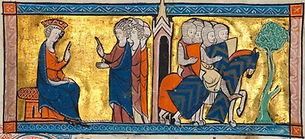
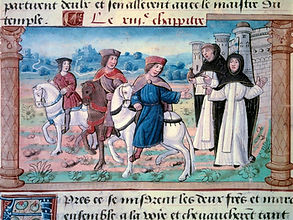
THE KNIGHTS TEMPLAR
At the Heart of the Templar Legend and Medieval Champagne
The Knights Templar remain one of the most fascinating religious and military orders of the Middle Ages. What many people do not realize is that the Order's destiny was shaped largely here, in Champagne—and above all in Troyes.
The Birth of the Order
c. 1119–1120
Warrior Monks in the Holy Land
Founded in Jerusalem shortly after the First Crusade, the Order of the Temple was originally created to protect pilgrims travelling through the Holy Land.
Within just a few decades, these warrior monks had become one of Europe's greatest military, political, and financial powers.
Troyes: Where the Order Received Official Recognition
January 13, 1129
The Council of Troyes
Troyes hosted one of the most significant church councils of the Middle Ages.
Convened under the authority of the Pope's legate, the Council of Troyes examined and officially recognised the young Order of the Poor Knights of Christ and of the Temple of Solomon.
It was here that the Knights Templar received the formal approval of the Roman Catholic Church.
The Role of Saint Bernard
One of the key figures behind the Order's success was Saint Bernard of Clairvaux, the great spiritual leader of Champagne and founder of Clairvaux Abbey.
Bernard became the Order's strongest advocate and played a decisive role in drafting its Rule, a strict code of life combining monastic discipline with military service.
Hugh of Payns: A Son of Champagne
The founder and first Grand Master of the Knights Templar, Hugh of Payns, was a nobleman from the village of Payns, located about fifteen kilometres (nine miles) north of Troyes.
After fighting in the Holy Land, he returned to Europe to organise the new Order with the support of the local nobility.
📍 Worth a Visit
If you are travelling by car, make time for a detour to Payns.
The Hugh of Payns Museum, built on the site of what is believed to have been the first Templar commandery in Western Europe, displays archaeological discoveries, scale models, and fascinating historical exhibits.
The Support of the Counts of Champagne
The Knights Templar owed much of their early success to the generosity of the Counts of Champagne.
The most remarkable example was Count Hugh I of Champagne.
A close friend of Hugh of Payns, he donated extensive estates to the Order before renouncing his titles, wealth, and even his wife in 1125 in order to join the Templars himself as a humble brother.
The Knights Templar and the Champagne Fairs
During the twelfth and thirteenth centuries, Troyes became one of the principal centres of the famous Champagne Fairs, the greatest commercial marketplace in Western Europe.
Italian, Flemish, German, and French merchants gathered here to trade cloth, spices, furs, and precious metals.
The Templars, renowned for their administrative and financial skills, developed an innovative banking network that operated across Europe.
They helped popularise the bill of exchange, a true precursor of the modern cheque and bank transfer.
A merchant could deposit money at a Templar commandery in Troyes and safely withdraw it in Paris, Italy, or even the Holy Land.
The Fall of the Order
October 13, 1307
The Mass Arrest
At the beginning of the fourteenth century, the wealth and independence of the Knights Templar aroused the hostility of King Philip IV of France, known as Philip the Fair.
He ordered the simultaneous arrest of every Templar in the kingdom.
Many were tortured and accused of heresy.
Some were executed—including fifty-four Templars in Paris in 1310 and the last Grand Master, Jacques de Molay, who was burned at the stake in 1314.
1312
The Dissolution
In 1312, Pope Clement V officially dissolved the Order of the Temple.
Most of the Templars' property was transferred to the Knights Hospitaller, who inherited many of their estates throughout Europe.
Following the Templars in Troyes
🏛 Saint Peter and Saint Paul Cathedral
The Council of Troyes was held on the site occupied today by the cathedral.
The magnificent Gothic building you see today, however, was constructed many years later.
🏰 The Former Templar Commandery
The main Templar commandery once stood in the heart of Troyes, around today's Rue du Temple and the area surrounding the Prefecture.
It formed a vast complex including a church, barns, living quarters, workshops, and commercial buildings closely connected with the Champagne Fairs.
📚 Jacques Chirac Media Library
Troyes possesses one of Europe's finest collections of medieval manuscripts, recognised by UNESCO.
The library regularly hosts exhibitions devoted to the history of the Knights Templar and medieval Champagne.
Key Dates
-
1119–1120 – Foundation of the Order in the Holy Land.
-
January 13, 1129 – The Council of Troyes officially recognises the Knights Templar.
-
Hugh of Payns – Founder and first Grand Master, born near Troyes.
-
Bills of Exchange – Banking innovation widely developed through the Champagne Fairs.
-
1307–1312 – Arrests, trials, and the dissolution of the Order.
The destiny of the Knights Templar—the warrior monks wearing the famous red cross on a white mantle—was shaped here, in Troyes.


RELIGIOUS BUILDING
The "City of Ten Churches"
Historical insights, fascinating anecdotes, and practical explanations to help you explore the remarkable religious heritage of Troyes.
1. Why Does Troyes Have So Many Churches?
Troyes is often nicknamed the "City of Ten Churches." To understand this exceptional concentration of religious buildings, we must go back to the Middle Ages and the Renaissance.
At that time, Troyes was one of the wealthiest cities in the Kingdom of France, thanks largely to the famous Champagne Fairs, which attracted merchants from across Europe. This prosperity enabled the Counts of Champagne, wealthy merchants, and powerful guilds to finance the construction of numerous parish churches, monasteries, convents, and monumental places of worship.
Another event profoundly shaped the city's religious landscape: the Great Fire of 1524.
Rather than discouraging its inhabitants, the disaster sparked an extraordinary rebuilding campaign throughout the sixteenth century. Troyes became one of France's leading artistic centres, renowned for the excellence of its stained glass and religious sculpture—giving rise to what is now known as the Troyes School.
2. Church, Basilica, or Cathedral—What's the Difference?
Church
A church is an ordinary Christian place of worship serving a local parish community.
In Troyes, most religious buildings fall into this category, including Sainte-Madeleine and Saint-Jean-au-Marché.
Cathedral
A cathedral is the principal church of a diocese.
Its name comes from the cathedra, the bishop's ceremonial seat, symbolising his spiritual authority.
In Troyes, Saint Peter and Saint Paul Cathedral is the only cathedral and the seat of the Diocese of Troyes.
Basilica
A basilica is an honorary title granted by the Pope to a church of exceptional historical, spiritual, or architectural significance.
In Troyes, Saint-Urbain Basilica holds the rank of Minor Basilica.
Note: In some major cities, a church may be both a cathedral and a basilica. This is not the case in Troyes, where each building has its own distinct role.
3. The Ten Major Religious Buildings
Cathedral
Saint Peter and Saint Paul Cathedral
The seat of the Diocese of Troyes, remarkable for both its impressive scale and its thousand-year history.
Minor Basilica
Saint-Urbain Basilica
A masterpiece of Rayonnant Gothic architecture, founded by Pope Urban IV on the very site of his childhood home.
Parish Church
Sainte-Madeleine Church
Generally regarded as the oldest church in Troyes, it houses one of France's greatest masterpieces of Renaissance sculpture—its extraordinary rood screen.
Parish Church
Saint-Jean-au-Marché Church
Located in the heart of the medieval market district, this church witnessed the royal marriage of King Louis XII and Anne of Brittany.
Parish Church
Saint-Pantaléon Church
Celebrated for its magnificent stained-glass windows and its remarkable collection of religious statues that survived the French Revolution.
Parish Church
Saint-Nizier Church
Easily recognised by its colourful glazed Burgundian roof tiles, it stands just a short walk from the cathedral.
Parish Church
Saint-Rémy Church
Distinguished by its remarkable twisted (spiral) spire, rising nearly 60 metres (197 feet), this church has long been one of Troyes' most important historic parishes.
Parish Church
Saint-Nicolas Church
Rebuilt after the Great Fire of 1524, it is notable for its monumental gallery and impressive Calvary.
Parish Church
Saint-Martin-ès-Vignes Church
Originally located outside the medieval walls, its history is closely connected with the vineyards that once surrounded Troyes.
Parish Church
Notre-Dame-des-Trévois Church
A twentieth-century church reflecting the city's modern expansion and the continuing tradition of religious architecture.
4. Why Are Churches Named After Saints?
In the Catholic tradition, every church is dedicated to a saint—or sometimes to a sacred mystery such as Our Lady—who is regarded as the heavenly protector of the local community.
The dedication often reflects local devotion, the presence of relics, the history of the neighbourhood, or the wishes of the church's founder.
Saint Peter
One of Jesus' apostles, regarded as the first Bishop of Rome and therefore the first Pope.
He is traditionally depicted holding the Keys to the Kingdom of Heaven.
Dedicating the cathedral to Saint Peter symbolises Troyes' attachment to the authority of the universal Church.
Saint Paul
Originally known as Saul, he persecuted Christians before his dramatic conversion on the road to Damascus.
He became Christianity's greatest missionary, spreading the Gospel throughout the Roman Empire through his journeys and letters.
Saint Urban
The basilica honours Pope Urban IV (Jacques Pantaléon), who was born in Troyes, the son of a humble cobbler.
After becoming Pope, he ordered the construction of the church on the exact site of his childhood home.
Saint Mary Magdalene
One of Christ's earliest disciples, she was the first witness of the Resurrection, earning the title "Apostle to the Apostles."
She symbolises repentance, spiritual transformation, and unwavering faith.
Saint John
"The disciple whom Jesus loved," traditionally regarded as the author of the Fourth Gospel and the Book of Revelation.
Represented by the eagle, he symbolises profound theology and Christian love.
His church stands at the heart of Troyes' historic market district.
Saint Pantaleon
An imperial physician in fourth-century Nicomedia, Pantaleon healed the sick in Christ's name and converted many of his patients.
As a martyr, he became one of Christianity's great healing saints, invoked against disease and epidemics.
Saint Nizier
A distinguished sixth-century Bishop of Lyon, renowned for his charity and his courage in confronting Merovingian kings.
His cult spread to Champagne following the arrival of his relics.
Saint Remigius (Saint Rémy)
The celebrated Bishop of Reims who baptised King Clovis around AD 496, sealing the historic alliance between the Frankish monarchy and the Church.
His patronage reflects Champagne's close ties with the French Crown.
Saint Nicholas
Fourth-century Bishop of Myra, famous for his generosity toward the poor and children.
Patron saint of sailors, merchants, and travellers, his church stood in an ideal location to reassure the merchants attending the Champagne Fairs.
Saint Martin
A Roman soldier who became Bishop of Tours.
He is famous for cutting his cloak in half to share it with a poor beggar outside Amiens.
His name symbolises charity, generosity, and the evangelisation of the countryside.
His church was originally surrounded by vineyards.
Our Lady (The Virgin Mary)
A title honouring the Virgin Mary, mother of Jesus, Queen of Heaven, and the foremost intercessor in Catholic tradition.
Notre-Dame-des-Trévois places the entire southern district of Troyes under her maternal protection.
5. A Masterpiece: The Rood Screen of Sainte-Madeleine
What Is a Rood Screen?
A rood screen is an elaborately carved stone or wooden partition found in medieval churches.
It physically and symbolically separated the nave, where the congregation gathered, from the choir, the sacred space reserved for the clergy.
What Was It Used For?
The rood screen served several purposes:
-
It marked the boundary between the secular world and the sacred sanctuary.
-
It supported a reading platform from which the Gospel and Epistle were proclaimed.
-
It carried a large crucifix above the central arch (known as the Rood).
-
Its richly carved decoration taught biblical stories to worshippers, many of whom could not read
Why Is It Called a "Jubé"?
The French word jubé comes from the opening words traditionally spoken by the reader before proclaiming Scripture:
"Jube, Domine, benedicere" —
"Lord, grant me your blessing."
Why Have Almost All Rood Screens Disappeared?
Following the Council of Trent (1545–1563), Catholic liturgy was reformed to make religious ceremonies more visible to the congregation.
Seen as unnecessary barriers, most rood screens across Europe were dismantled during the seventeenth and eighteenth centuries.
Finding one still standing today is exceptionally rare.
The Rood Screen of Troyes
-
Date: Early sixteenth century (c. 1508–1517).
-
Style: A magnificent transition between Flamboyant Gothic and the French Renaissance.
-
Sculptor: Traditionally attributed to the local master sculptor Jean Gailde.
He was so proud of his masterpiece that he requested to be buried beneath it—and his tomb remains there today.
Its delicate stone carving resembles intricate lace, with suspended arches that appear almost to defy gravity.
👀 Look Closely...
"Look at the incredible delicacy of this stonework. It almost looks like lace or fabric, yet it is carved entirely from soft chalk stone.
During the Middle Ages, worshippers standing here could see very little of the religious ceremonies taking place beyond this screen. The choir remained hidden behind this magnificent stone partition.
Almost every rood screen in France was destroyed over the centuries. The one before you is a miraculous survivor—one of the finest treasures of French religious architecture."
MAJOR DISASTERS
Troyes: Shaped by Fire and Water
If Troyes enchants visitors today with its half-timbered houses and colourful medieval streets, it is because the city is a remarkable survivor. Fires, floods and wars have repeatedly tested Troyes throughout its history. Each time, it rose from the ruins—and it is often these disasters that gave the city the appearance you admire today.
In a nutshell
The remarkable harmony of the façades, the dense network of timber-framed houses and the streets that seem frozen in the sixteenth century all tell a story of destruction and renewal. Three forces have constantly challenged Troyes—fire, water and war—and by rebuilding itself after each ordeal, the city became the one you are visiting today. This guide invites you to discover Troyes through the traces these events have left behind.
Fire: From Ashes to the Renaissance
Throughout the Middle Ages, Troyes was a city built largely of timber, thatched roofs and workshops—a city highly vulnerable to fire. Major blazes were a constant threat until the devastating fire of 1524, which, paradoxically, gave the city its most beautiful architectural heritage.
888–892
The Vikings Set the City Ablaze
Long before accidental fires became the city's greatest threat, Viking raids devastated Troyes at the end of the ninth century. The city and its early cathedral were destroyed several times, forcing the inhabitants to rebuild again and again. Troyes learned resilience from an early age.
23 July 1188
The Great Medieval Fire
During the famous Champagne Fairs, a devastating fire swept through much of the city. It destroyed the Romanesque cathedral, the Counts' Palace, the Collegiate Church of Saint-Étienne and the Abbey of Notre-Dame-aux-Nonnains, where several nuns lost their lives and all the abbey's archives were reduced to ashes.
Yet this tragedy also marked a turning point. It led to the decision to rebuild the cathedral in the new Gothic style—the magnificent cathedral you can admire today. Construction began around the year 1200 and continued for more than four centuries.
13th–14th Centuries
The Price of a City of Craftsmen
Another major fire struck the city as early as 1209. In the densely populated medieval centre, fire was part of everyday life. Blacksmiths' forges, bakers' ovens, dyers' vats and household kitchens were all housed within timber buildings, making accidental fires frequent. Watchmen were posted on church towers to spot outbreaks as quickly as possible.
24–26 May 1524
The Great Fire: The Disaster That Shaped Troyes
This is the fire every resident of Troyes knows about.
On the evening of 24 May 1524, around 11 p.m., a fire broke out in the house of an apothecary at the corner of today's Rue Émile-Zola and Rue Saussier. Fanned by strong winds, the flames raged continuously for twenty-six hours, finally dying out during the night of 26 May.
The damage was catastrophic:
-
Around one quarter of the city was destroyed.
-
Nearly one third of the population lost their homes.
-
Close to 3,000 houses were reduced to ashes.
-
Around 7,500 people were left homeless.
The districts of Croncels, Saint-Jean and the Belfry Quarter were devastated, and the great bells of Saint-Jean-au-Marché Church melted in the intense heat.
And yet, it is from this disaster that modern Troyes was born.
During what historians call the Beautiful Sixteenth Century, the city was almost entirely rebuilt within just a few decades. Stone was too expensive, so builders continued to use timber—but with significant improvements. The elegant half-timbered houses you see today were constructed with masonry firewalls between neighbouring buildings to slow the spread of future fires, and several streets were widened for greater safety.
👀 Look Around
Without the tragedy of 1524, the historic centre of Troyes would never have acquired its remarkably harmonious and picturesque appearance. The neighbourhood you are walking through was literally born from the ashes—a Renaissance city rebuilt over the remains of its medieval predecessor.
17th–19th Centuries
The Industrial Age and New Fire Risks
As Troyes became France's capital of knitwear manufacturing, the danger of city-wide fires gradually diminished thanks to the creation of organised fire brigades.
However, textile mills, warehouses filled with wool and cotton, and steam-powered machinery introduced new fire hazards. Fires still occurred, but they were now usually confined to factories and workshops rather than engulfing the entire city.
Water: Taming the River Seine and Its Channels
Troyes is a city shaped by water. Here, the River Seine divides into numerous branches and canals that once powered mills and supported tanners, paper makers and other craftsmen. Yet these waterways also brought constant danger. Every rainy autumn or spring snowmelt threatened to flood the lower parts of the city.
Under the Ancien Régime
A City Living with Water
For centuries, water dictated everyday life in Troyes. The river was both a valuable resource and a permanent threat. Major floods occurred regularly, inundating low-lying neighbourhoods and cutting off access roads. Living in Troyes meant learning to live alongside the Seine.
The floods of 1866 and 1896 were already remembered as exceptional, causing widespread flooding across the lower districts.
21–22 January 1910
The Great Flood: Troyes Under Water
The same historic flood that submerged Paris also struck Troyes.
After several days of heavy rainfall, the Seine and its many branches overflowed. On 21 January, around 60 cm (2 ft) of water flooded the districts of Tauxelles, Charmilles, Vouldy, Moline and Vacherie.
The following day, at the peak of the flood, the water reached the city centre. The Prefecture, the lower part of Rue Émile-Zola, Rue Urbain IV and the Town Hall Square were all inundated.
Sewer systems failed, factories shut down, tram services came to a halt and several bridges were swept away.
In the nearby village of Saint-Parres-aux-Tertres, completely isolated by the floodwaters, the mayor had to row a boat into Troyes to collect food supplies for the residents.
20th Century
Repeated Flooding
The Seine continued to overflow throughout the twentieth century.
Significant floods occurred in 1924, 1955, 1970, 1977, 1983, 1991, 1993, 1994 and 1995, flooding historic cellars and surrounding neighbourhoods.
For the people of Troyes, the question was never if the river would flood again, but when.
The Modern Solution: The Great Lakes of Champagne
To protect both Troyes and Paris downstream, a vast flood-control system was created upstream during the twentieth century.
The Lac d'Orient, together with the other lakes of the Forêt d'Orient Regional Natural Park, and the Lac du Der-Chantecoq on the River Marne, act as enormous reservoirs. During winter they store excess water to reduce the risk of flooding, and during summer they gradually release it to maintain river levels.
Thanks to these engineering projects, Troyes has been spared further major floods.
Today, these lakes are not only essential for flood protection but also among the region's most popular destinations for walking, cycling, sailing and swimming. Located just twenty minutes from Troyes, they make an ideal excursion during your stay.
Key Takeaways
Troyes has been destroyed and rebuilt so many times throughout its history that much of its architectural heritage is, paradoxically, the result of these disasters.
-
The Great Fire of 1188 led to the construction of the magnificent Gothic cathedral that dominates the city today.
-
The Great Fire of 1524 gave birth to the remarkable collection of Renaissance half-timbered houses that make Troyes unique.
-
Repeated flooding by the River Seine shaped the city's relationship with water until the creation of the Great Lakes of Champagne, which now protect both Troyes and Paris from major floods.
-
And although wars left their mark on the city, its historic centre was, remarkably, largely spared, allowing its exceptional architectural heritage to survive.
In Summary
Troyes has been rebuilt several times throughout its history. The beautiful half-timbered houses you admire today owe much of their existence to the devastating fire of 1524, which destroyed a large part of the medieval city and paved the way for its Renaissance reconstruction.
For centuries, the River Seine also shaped the lives of the people of Troyes through frequent flooding. It was only with the construction of the great reservoir lakes during the twentieth century that these floods were finally brought under control.
As you stroll through the streets of Troyes today, you are discovering a city whose greatest treasures were often born from adversity.
Enjoy your visit!
May your walk through Troyes take you on a journey through fire, water and the centuries.